

English | Beompae
Page information
Author Jogye On25-11-11 10:35 Views350 Comments0Related links
Body
Beompae (범패, Korean artistic Buddhist Chanting)
Beompae is one of the three major traditional vocal arts of Korea, alongside gagok (lyrical song) and pansori (narrative singing). Considered one of the foundational roots of Korean music, Beompae refers to all forms of chanting performed during Buddhist rituals. It is also known as eosan.
Beompae is typically performed during important Buddhist rites such as Yeongsanjae (Rite of Vulture Peak), Suryukjae (Water and Land Ceremony), Saengjeon Yesujae ((Pre-Death Memorial Ritual), and 49jae (49 Day Memorial Rituals).
The word Beom originates from beomeum, meaning heavenly or Brahma sound, while Pae is derived from the Sanskrit word phasa (also rendered paeik or pasa), which signifies praise or offering.
Beompae is both the hard-earned fruit of rigorous practice that renders the Buddha’s teaching in sound and a way of embodying that teaching through body, speech, and mind. This is its function and Buddhist significance. It also has a doctrinal role. Through solemn aural and visual rites, it kindles faith and devotion.
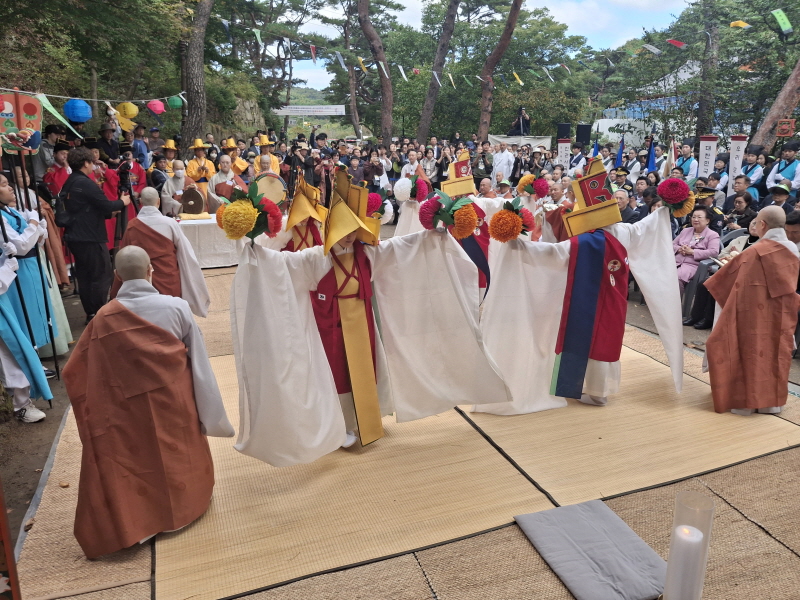


Saengjeon Yesujae at Bongeunsa Temple, A National Intangible Cultural Heritage. Source: Bongeunsa Temple Official
Beompae of Jingwansa. Source: Jingwansa Temple
Videos:
Beompae by Ven. Donghee at ARKO Theater, July 2023 (Duration: 21m 41s)
https://www.youtube.com/watch?v=jmp2SIOzN4g
Hwacheong from the Saengjeon Yesujae at Bongeunsa, 2018 (Duration: 17m 30s)
https://www.youtube.com/watch?v=OE7ra2-uazE
