

English | Balwoogongyang, the communal monastic meal ceremony
Page information
Author Jogye On25-12-18 09:38 Views1,984 Comments0Related links
Body
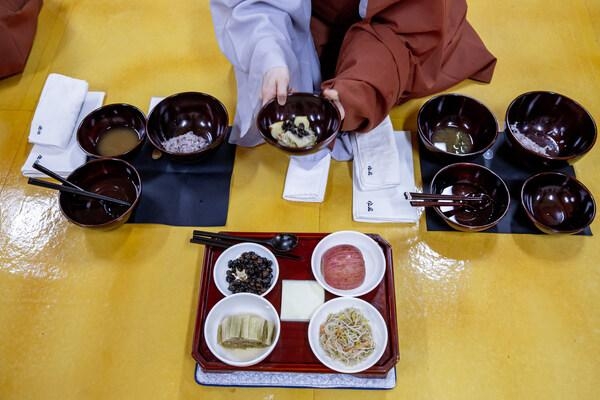
The term “balwoo” (鉢盂) refers to the bowls used by monks for communal meals in temples, and it means “a vessel befitting a spiritual practitioner.” These bowls are also referred to as baritdae, baru, baldara, and eungi.
A set of balwoos typically consists of four to seven bowls. Korean monks use a set of four bowls called the saha-balwoo: the eosi-balwoo for rice, the guk-balwoo for soup, the cheongsu-balwoo for clean water, and the banchan-balwoo for side dishes.
The spirit of Buddhist practice permeates the balwoo meal ceremony, which embodies the following principles:
First, the sangha should appreciate the labor of countless people involved in preparing the food, the generosity of the donors, and the lives of the ingredients.
Second, the sangha should not discriminate based on the quality or quantity of the food, lest the monks forget its blessings.
Third, the sangha should transform the three poisons of greed, hatred, and ignorance into the three trainings of precepts, meditation, and wisdom through the spirit of generosity.
Fourth, the sangha should maintain the physical health necessary for ardent practice.
The ceremony also emphasizes the ideals of equality where the entire sangha shares the same food; a thoroughly hygienic and clean lifestyle; a frugal lifestyle that permits no waste; and communal living that fosters unity and harmony.
